takings from T.S. Eliot’s, Little Gidding

chère douce Paris, je reviendrai un jour

IMG_8019


We shall not cease from exploration

And the end of all our exploring

Will be to arrive where we started

And know the place for the first time.


What we call the beginning is often the end

And to make and end is to make a beginning.

The end is where we start from.

For last words belong to last years language

And next years words await another voice.


But the passage now presents no hindrance

To the spirit unappeased and peregrine.

Between two worlds become much like each other.

So i find words i never thought to speak.

the mother, 1949

“there has been an enormous amount of talk about the sacred rights of women, but being a mother is not how women gained the right to vote; the unwed mother is still scorned; it is only in marriage that the mother is glorified- in other words, as long as she is subordinate to the husband. As long as he is the economic head of the family, even though it is she who cares for the children, they depend far more on him than on her. This is why, as has been seen, the mother’s relationship with her children is deeply influenced by the one she maintains with her husband. So conjugal relations, homemaking and motherhood form a whole in which all the parts are determinant; tenderly united to her husband, the wife (mother) can cheerfully carry out the duties of the home; happy with her children, she will be understanding of her husband. But this harmony is not easy to attain, for the different functions assigned to the wife(mother) conflict with each other. Women magazines amply advise the housewife on the art of maintaining her sexual attraction while doing the dishes, of remaining elegant throughout pregnancy, of reconciling flirtation, motherhood and economy; but if she conscientiously follows their advice, she will soon be overwhelmed and disfigured by care; it is very difficult to remain desirable with chapped hands and a body deformed by pregnancies; this is why women in love often feel resentment of the children who ruin her seduction and deprive her of her husbands caresses; if she is, by contrast, deeply maternal, she is jealous of the man who also claims the children as his. But then, the perfect homemaker, as has been seen, contradicts the movement of life: The child is the enemy of waxed floors. Maternal love is often lost  in the reprimands and outbursts that underlie the concern for a well-kept home. It is not surprising that the woman torn between these contradictions often spends her day in a state of nervousness and bitterness; she always loses on some level, and her gains are precarious, they do not count as any sure success. She can never save herself by her work alone; it keeps her occupied, but does not constitute her justification: her justification rests on outside freedoms. The wife (mother) shut up in her home cannot establish her existence on her own; she does not have the means to affirm herself in her singularity: and this singularity is consequently not acknowledged.”

Simone de Beauvoir, the Second Sex 1949


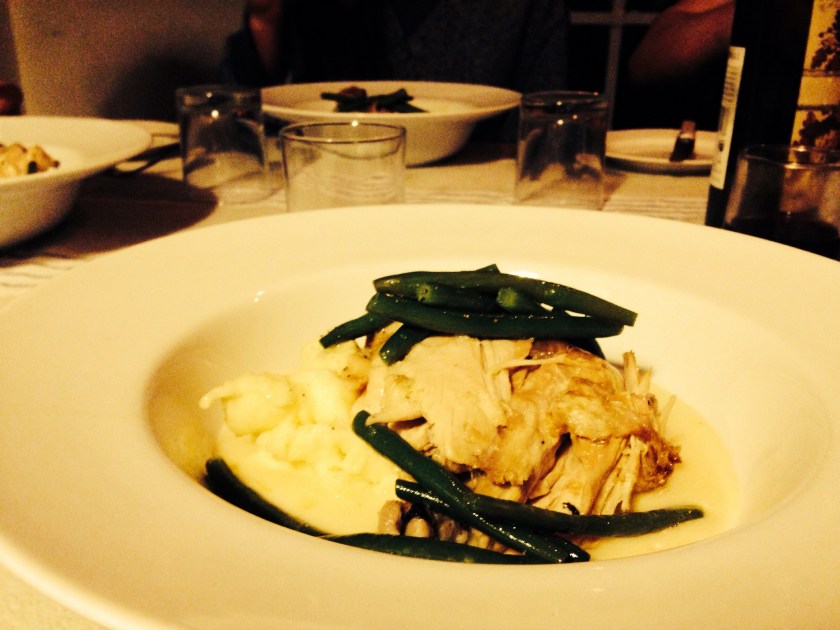
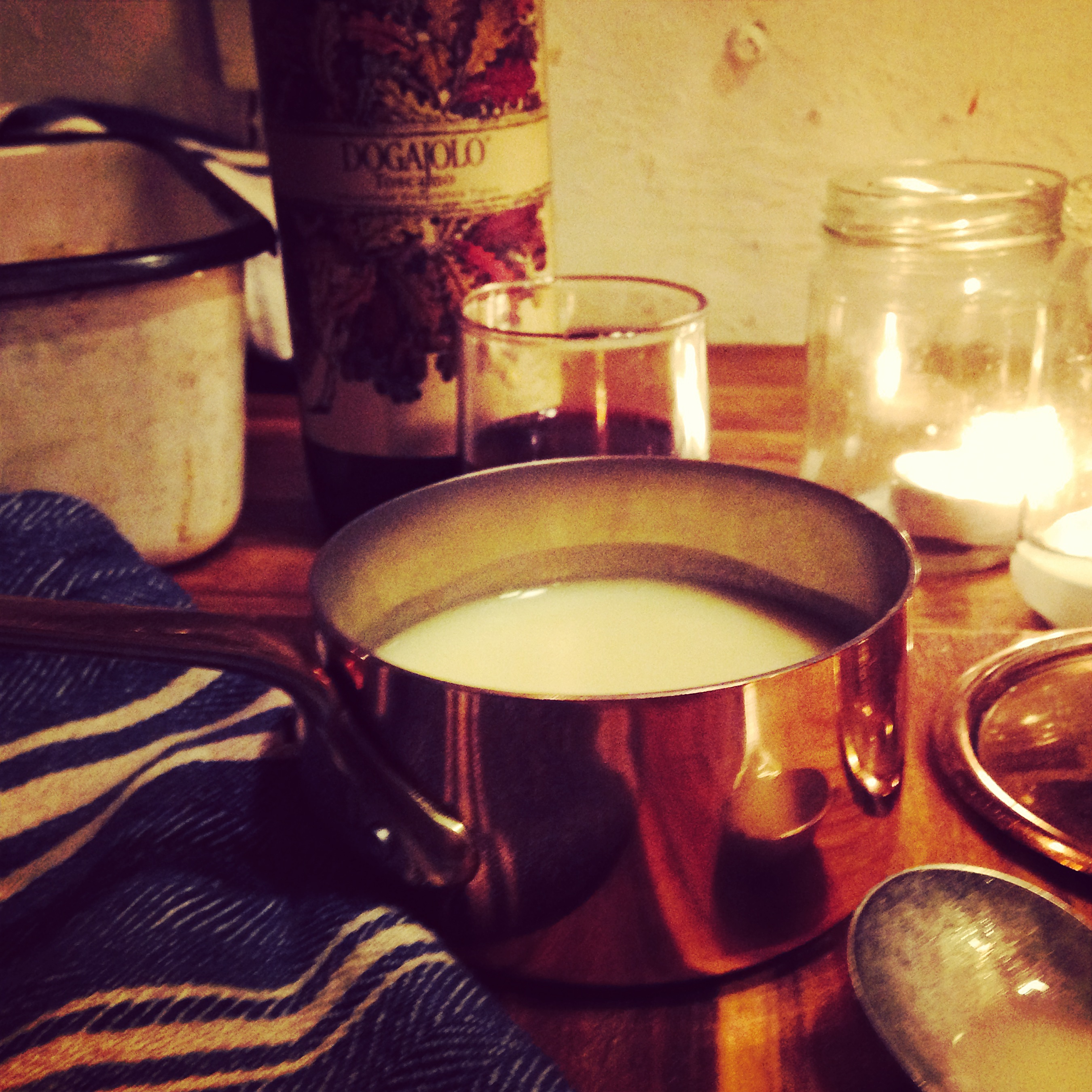
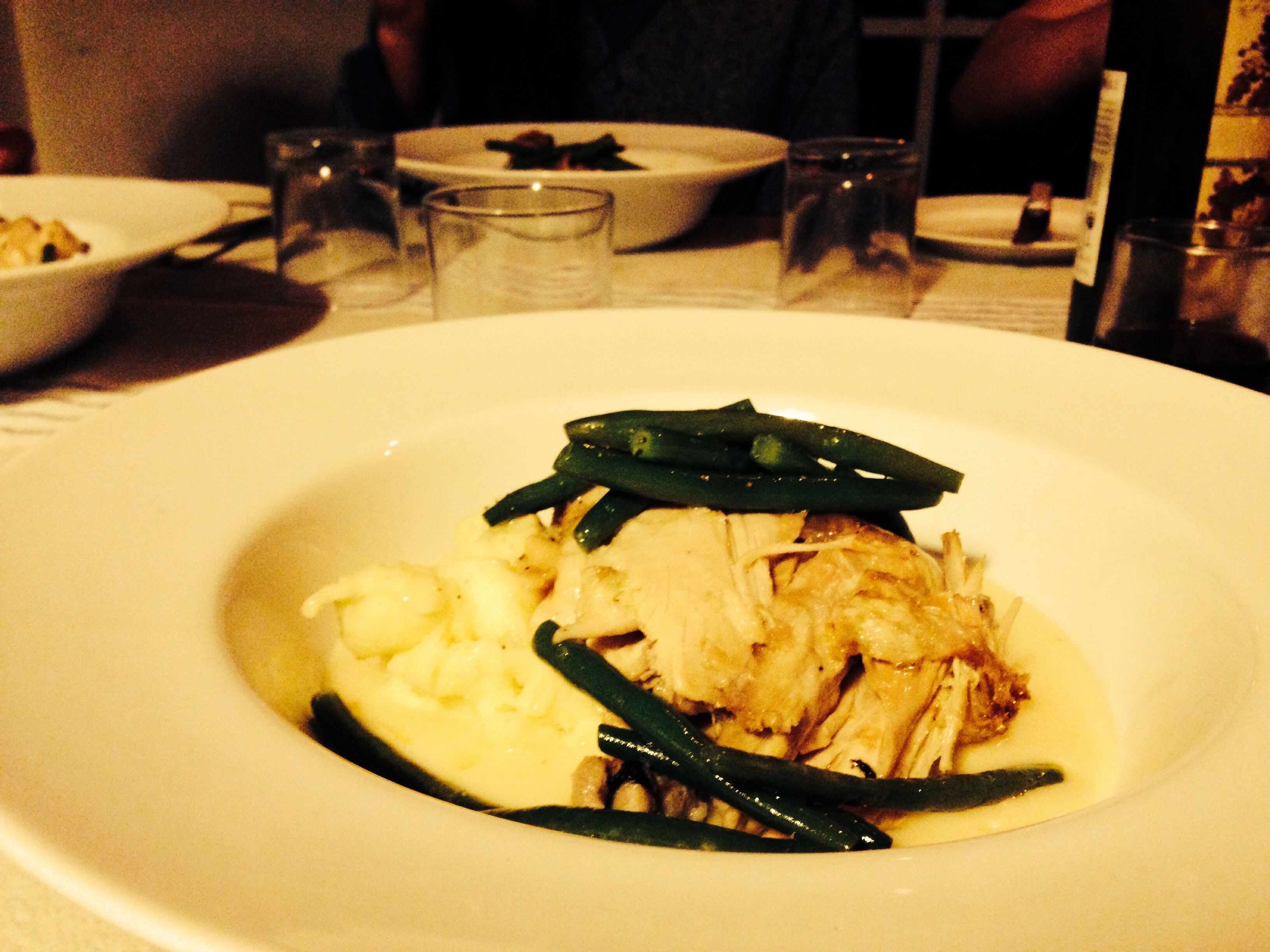
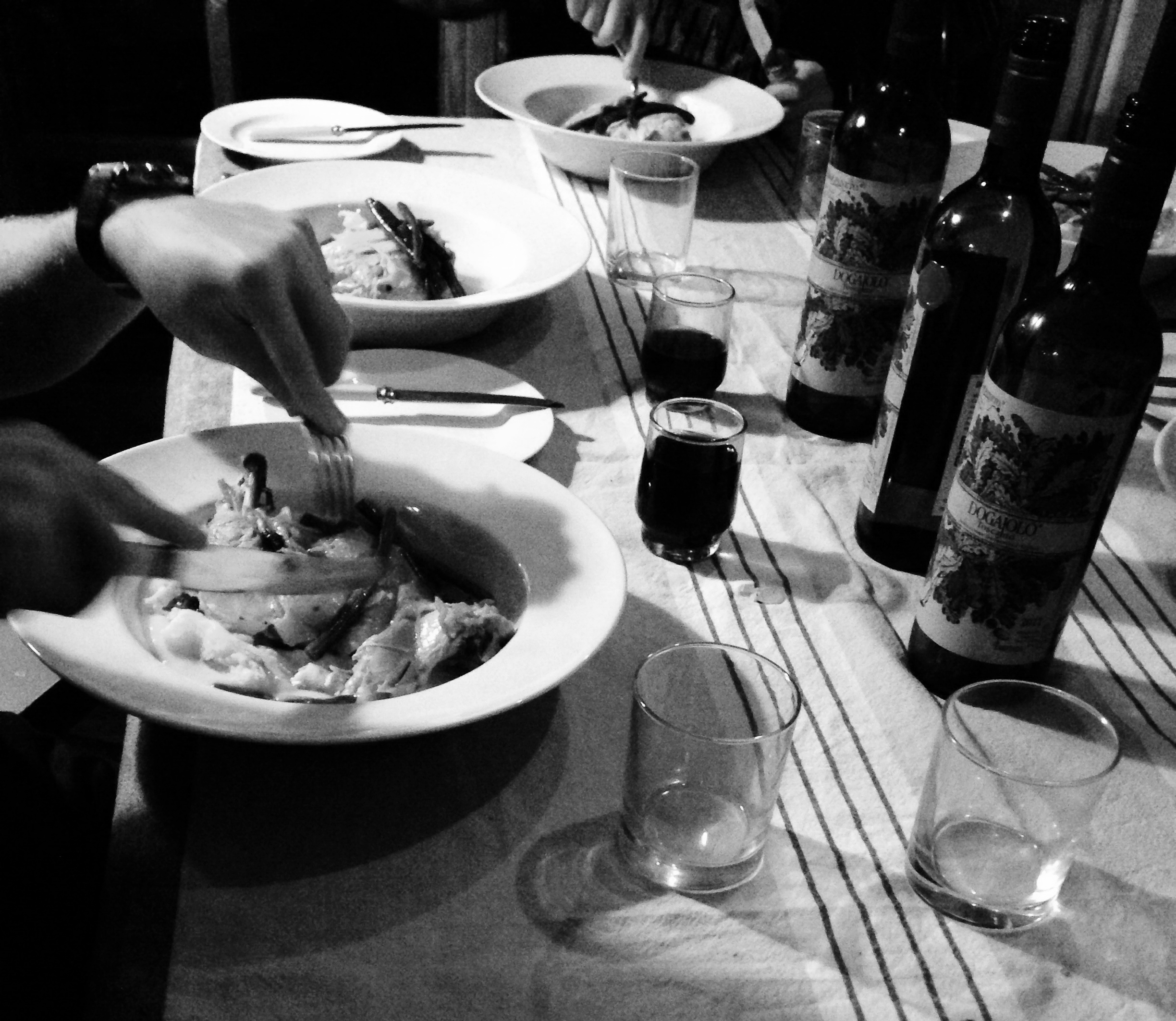
Slow roasted chicken with silky potatoes green beans and veloutè sauce


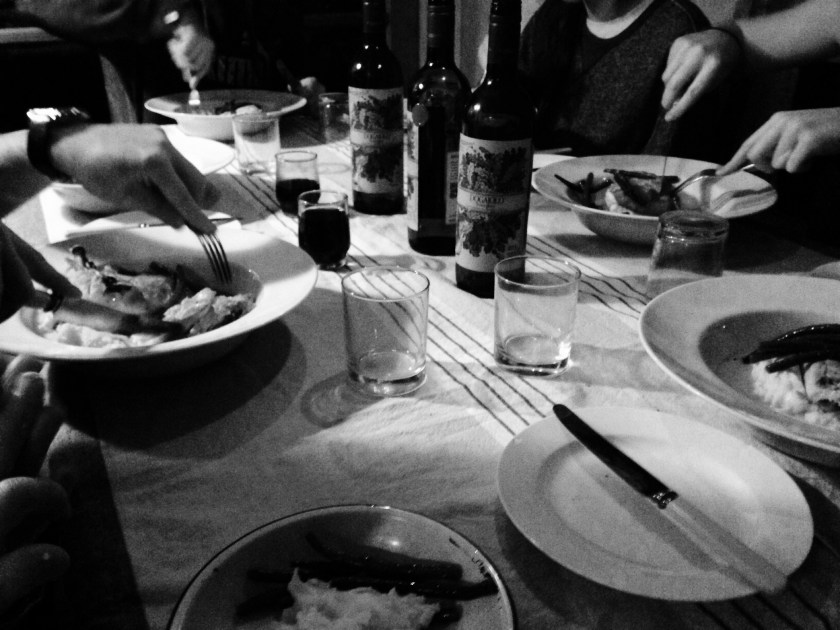
we ate well and cheaply and drank well and cheaply and slept well and warm together and loved each other

Earnest Hemingway, A Moveable Feast


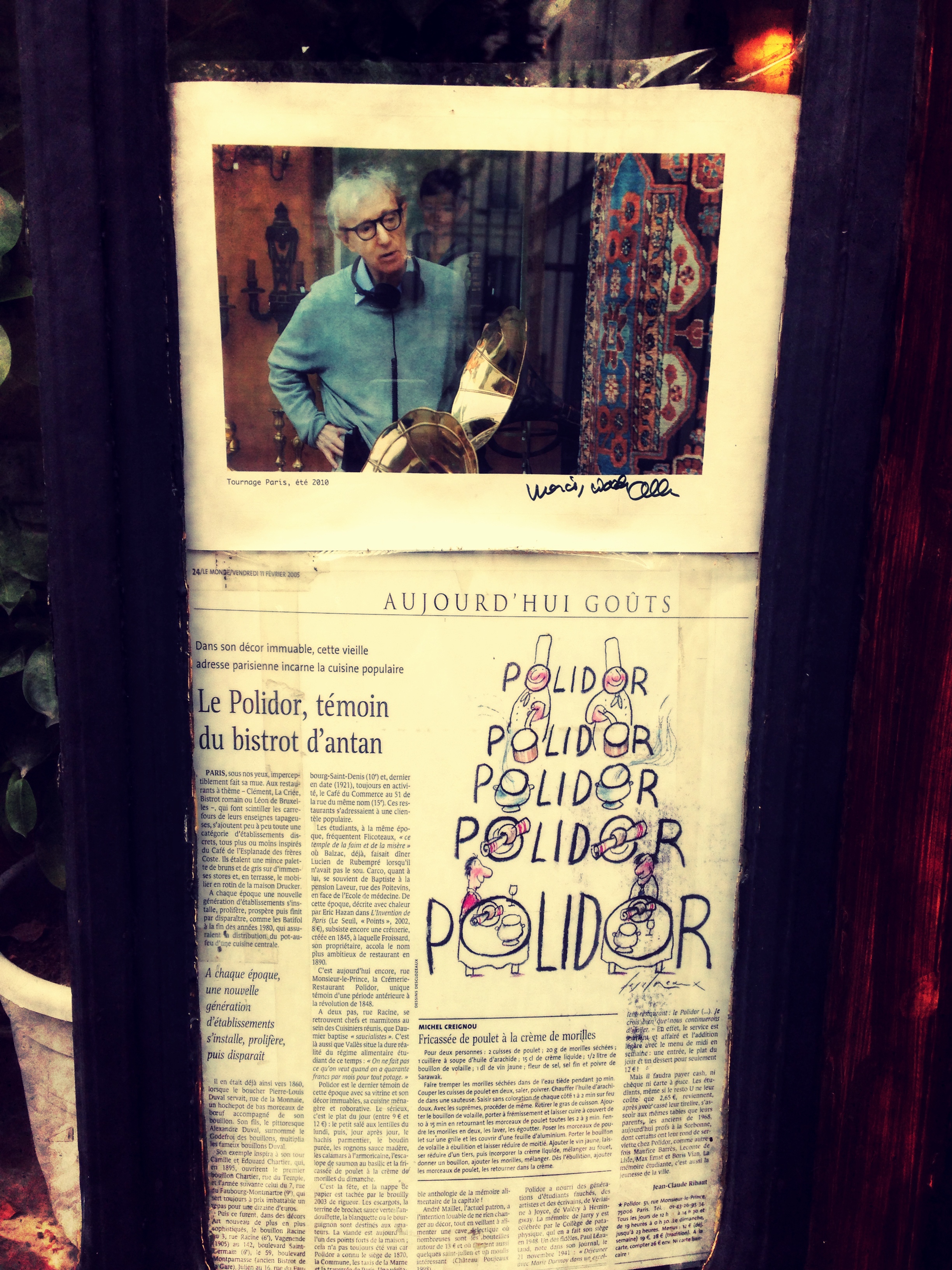
IMG_2962Restaurant Polidor 41 rue monsieur Le prince 75006 ParisIMG_2961Polidor restaurant featured in Woody Allen’s, Midnight in Paris 2011IMG_2876
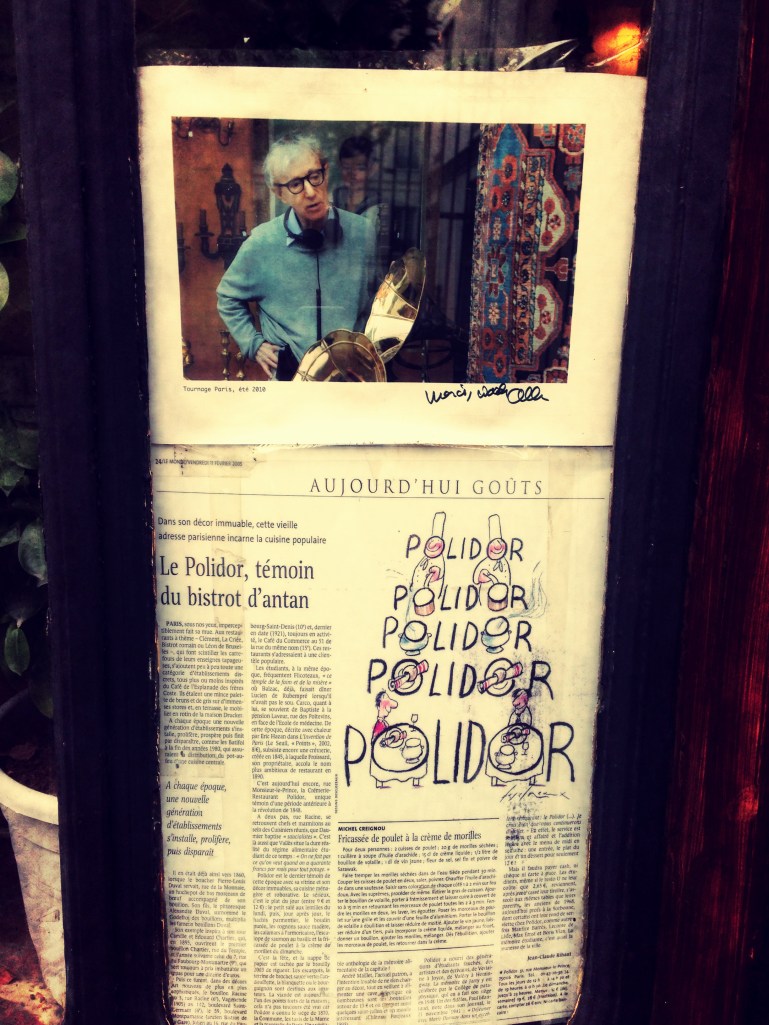
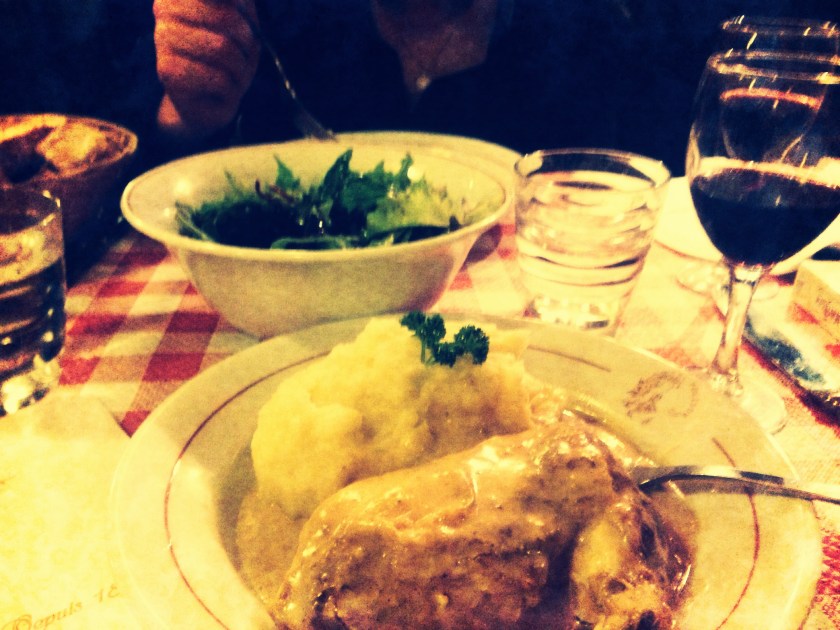
We dined here three time during our four night stay, at this wonderfully humble restruant famous for Hemingway. I ordered the same meal twice not for any other reason than to simply indulge my senses once more in the simplicity of this succulent dish, suprême de poulet veloutè de morilles,purèe. ‘superbe’

IMG_5586 IMG_5575 IMG_5565 IMG_5566 IMG_5569 IMG_5563

 Slow roasted chicken with silky potatoes and green beans with veloutè sauce

Ingredients for the chicken: 4 large pieces of free-range Maryland chicken,1 litre chicken stock, 3 continental parsley stalks, 2 cloves of garlic, cracked pepper

Method: place all the chicken into a deep baking dish, they can rest on top of each other. lay the parsley over the chicken, add the garlic whole to the baking dish, lightly season with the cracked pepper and then pour in the stock. Cover tightly with foil the entire top of the baking dish to keep all the steam contained. Set the oven at 180°C and slow roast for 2 hours. Check the chicken after approximately an hour and ladle the stock over the chicken sitting out of the stock, recover with the foil and continue roasting. Meanwhile prepare the veloutè.


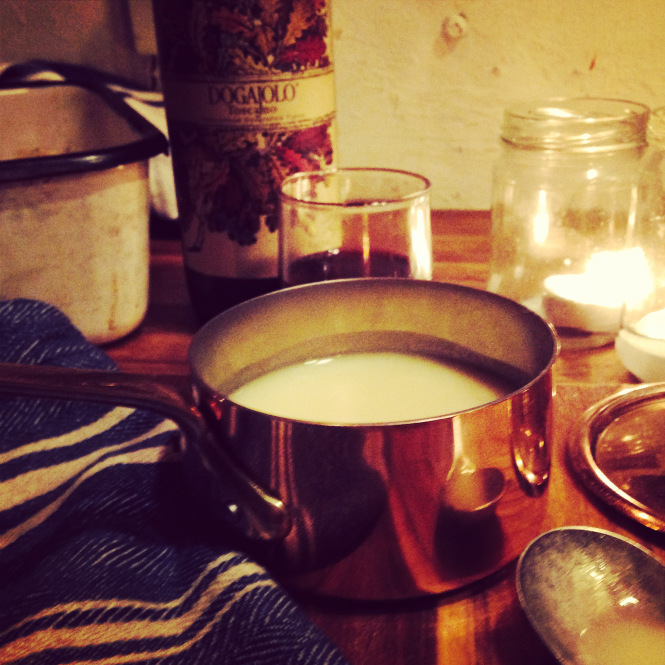
ingredients for the veloutè sauce: 100grams butter,100grams flour,1litre chicken stock

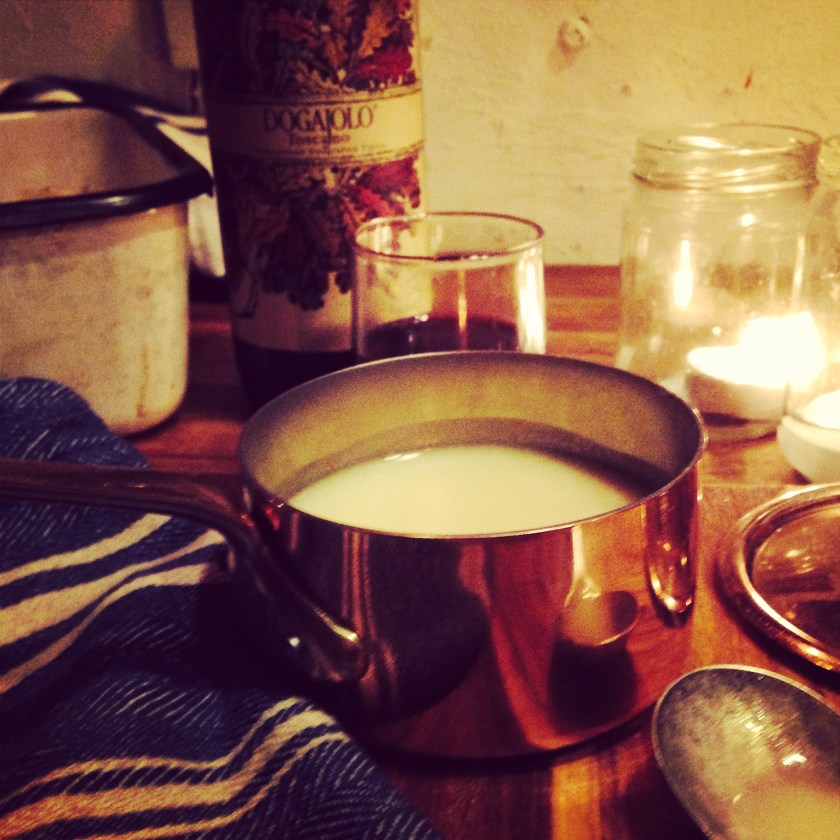
Method:In a saucepan gently melt the butter without letting it colour. Remove from the heat and add the flour all at once and stir to combine. Place the pan back on the heat and cook over a gentle heat to a lightly fawn colour. Allow to cool. Bring the stock to the boil. Add the stock to the roux (flour mix) slowly over the heat, beating in well and allow to thicken before adding the next ladle. Bring to the boil, adjust heat to a simmer and cook for 30 minutes.

ingredients for the potatoes: 6 large desiree potatoes peeled and chopped,50grams butter, 250mls cream, salt to taste

method: In a pot of boiling water add the peeled and chopped potatos, boil on a rapid heat until cooked through then strain and return to the pot, mash well until there are no lumps . In another saucepan gently heat the butter until melted and add the cream cook until warmed through then add the mix to the potatoes. With a cake spatula and over a gentle heat work the cream through the potatoes until silky smooth.

Next, boil the string beans for a few minutes, ladle the veloutè into wide bowls add a large scoop of the potato and place a piece of the chicken on top finally drain the beans lightly drizzle in olive oil and season then place a few onto the chicken. Serve.

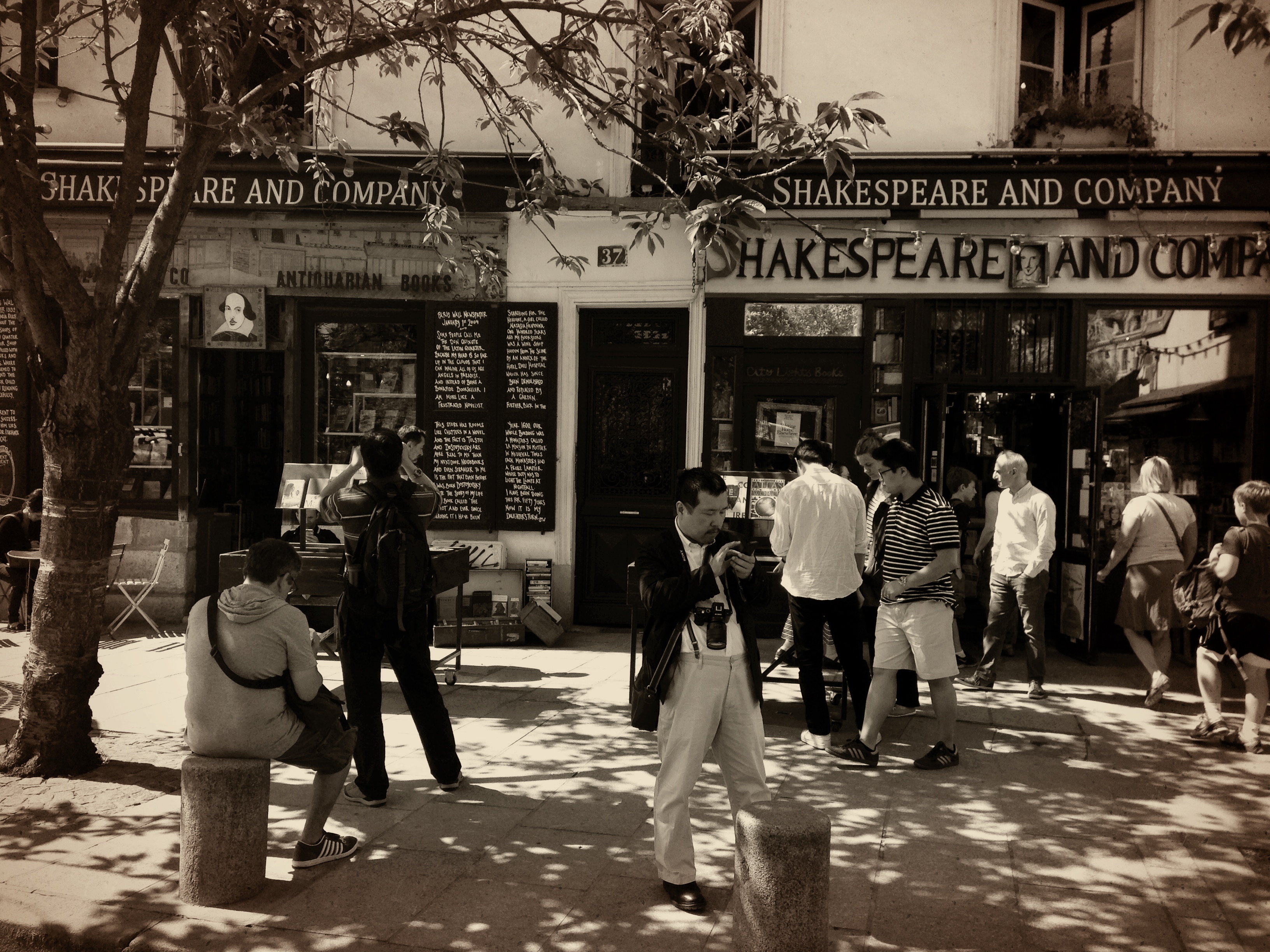
Shakespeare and company

IMG_2673

Fifty Grand and The Sun also Rises, introduces us to Hemingway. His individual and his concept of human nature were both very close to ours (referring to Jean-Paul Sartre). Hemingways lovers were in love all of the time, body and soul, actions emotions and words were all equally permeated with sexuality and when they gave themselves to desire, to pleasure, it bound them together in their totality.


There was another thing that pleased us. If a man brings his entire self to every situation, there can be no such thing as a ‘base occasion’. We attached much value to the small pleasures of daily life, and Hemingway lent romantic charm to such things as a walk, a meal or a conversation;… at the touch of his pen insignificant details suddenly took on meaning. The kind of realism, which described things just as they are.

words by Simone de Beauvoir, Prime of Life

IMG_2834 IMG_2822 IMG_2835

One thing that I have taken great delight in was the unforeseen wonder of the bountiful bookshops prevailing in this endearing city. Paris was indeed full of surprises. We visit the well-known Shakespeare and Company and immediately are captivated by the lively atmosphere of passionate literary fans wandering in awe of the scene of books that they are surrounded by.  Upstairs there is a library, of donated books that are neither for sale nor for borrowing, they are priceless in their value and you can take great pleasure in making yourself comfortable in a worn leather chair and immerse yourself in one of the precious pieces for a while. No one will ask you to move or to leave, you can sit, absorb, dream, write, read or even play the piano if you are inspired to do so.

Paris’s bookshops are alluring and plentiful, they are a wonderful way of  intimately getting to know this enchanting city.

IMG_2676 IMG_3134 IMG_3135 IMG_3136